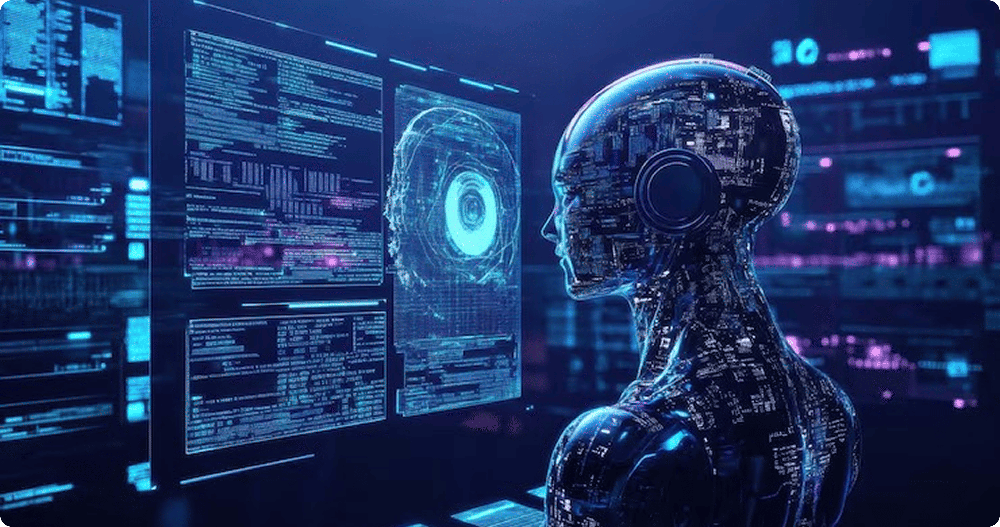
The Evolution of Digital Transformation
Digital transformation is not just about tools — it’s about reimagining how work gets done.
PublishedAugust 10, 2026
CategoryDigital Transformation
Reading time4 min read

In today’s fast-moving digital world, businesses across every sector are rethinking how they operate, deliver value, and stay competitive. Digital transformation is no longer an optional upgrade — it’s a strategic shift that reshapes processes, customer experiences, and entire business models. As new technologies evolve, companies must adapt quickly to meet modern expectations and unlock new growth opportunities.
Section
Why digital transformation matters for modern organizations
Digital transformation is not just about tools — it’s about reimagining how work gets done. Forward-thinking companies use digital transformation to boost performance, increase efficiency, and future-proof their operations. Organizations that embrace digital change can: Digital transformation empowers businesses to work smarter, respond faster, and create sustainable long-term growth.
Section
How the industry is evolving through digital transformation
Below are some of the most influential trends reshaping industries worldwide. AI is becoming a central driver of efficiency and innovation. Cloud technology gives businesses the flexibility to grow and adapt rapidly. Data has become one of the most valuable assets in digital transformation. A stronger digital experience builds loyalty and trust.
Section
Turning challenges into opportunities through strategic transformation
Managing GenAI projects isn’t just technical — it requires adaptability. Leaders achieve better outcomes when they focus on: Transformation becomes more successful when teams feel empowered and aligned under a shared vision.
Section
Conclusion
Digital transformation is an ongoing journey. Strong leaders prioritize: With the right mindset, organizations remain resilient and adaptable as technologies evolve. Digital transformation is redefining how industries operate, compete, and grow. By leveraging modern technologies, investing in data, and focusing on customer-centric digital experiences, organizations can unlock new value and stay ahead in a rapidly evolving world. The future belongs to businesses that embrace digital transformation not as a project, but as a continuous evolution toward smarter operations and extraordinary outcomes.
What changed
How the industry is actually changing.
The word has been used loosely for a decade, so it is worth being specific about what has genuinely shifted. The center of gravity moved from large programs to continuous capability. The useful unit is now a working process that gets better continuously, rather than a three-year program with a completion date, and the failure mode of the old model was a long reveal to a business that had moved in the meantime. AI changed the ceiling on automation, particularly for unstructured work that resisted traditional process automation. That expanded the set of viable processes considerably, and it introduced a new category of risk around output quality that did not previously exist. Cloud data platforms became normal, which made data availability less of a differentiator and more of a precondition. The remaining hard problems shifted to governance, quality, and lineage rather than to getting data into a warehouse. Buying versus building reversed for many functions. Mature capabilities are increasingly assembled from existing services, and internal teams are expected to orchestrate and differentiate rather than build everything. And organizational ownership became the real constraint. Technology programs fail on change management far more often than on technology, so the durable advantage sits with organizations that can change how work is done, not with those that adopt tools fastest.
Getting started
Where to start, and what to avoid.
Sequencing matters more than strategy here, because the most common failure is a broad program that never produces anything a user can see. Pick one process with measurable cost, visible owners, and real volume. A process nobody owns cannot be changed, and one with low volume will not demonstrate anything. Establish what it costs today, in hours and in delay, because the number becomes the baseline that justifies everything afterwards and the one executives will remember. Run one narrow end-to-end slice rather than a foundation first. Foundations are how programs spend a year invisible; a working slice on one process proves the approach and generates the organizational support that makes the next step possible. Involve the people who do the work from the first week. This is the single most reliable predictor of whether a change is adopted, and it is also how you discover the undocumented steps that quietly determine the real cost. Measure from the start, because a transformation with no baseline cannot be shown to have worked. What to avoid: enterprise-wide programs announced before any pilot, platforms adopted before a use case, and automating a process you have not redesigned. Automating a bad process reliably produces a faster bad process and burns the credibility you will need for the next attempt.
““Digital transformation is the bridge between traditional operations and a future where innovation powers every decision.””
Key takeaways
- ✓Improve customer experiences
- ✓Streamline internal workflows
- ✓Reduce operational inefficiencies
- ✓Enable data-driven decision-making
- ✓Innovate faster than competitors
- ✓Stay resilient in constantly changing markets
- ✓Reduce manual labor
- ✓Improve accuracy and consistency
- ✓Enhance customer interactions
- ✓Increase productivity
- ✓Scalable infrastructure
- ✓Remote collaboration
- ✓Secure data storage
- ✓Faster deployment and updates
- ✓dentify new opportunities
- ✓Personalize experiences
- ✓Reduce risks
- ✓Strengthen strategic planning
- ✓Frictionless onboarding
- ✓Self-service systems
- ✓Omnichannel communication
- ✓Personalized recommendations
- ✓Human-centered problem-solving
- ✓Continuous learning and iteration
- ✓Addressing risks early
- ✓Encouraging team experimentation
- ✓Building transparent, AI-aware processes
- ✓Continuous improvement
- ✓Flexible planning
- ✓Cross-functional collaboration
- ✓Scalable digital tools
- ✓Culture-building around innovation
01
Automation and AI adoption
Businesses are embracing AI and automation to perform tasks faster and more accurately. This shift helps companies:
02
Cloud-first ecosystems
Organizations are moving away from traditional on-premise systems and adopting cloud platforms to enable:
03
Data-driven decision-making
The modern industry runs on data. Companies use analytics to understand customers, optimize processes, and forecast outcomes. Data empowers leaders to:
04
Enhanced digital customer experiences
Customers expect seamless, personalized interactions at every touchpoint. Businesses now focus on:
Written by

Vordx TeamAI & Software Engineering Team
The Vordx Technologies engineering team builds AI systems, web platforms, and digital products for startups and enterprises. We write about the architecture, cost, and delivery decisions that determine whether a software project actually ships, drawing on production work across AI development, backend systems, and product design.
Need this applied to your product?
Let Vordx review your UX, website, or product flow and identify the highest-impact trust gaps.
Start a projectRead next
More field notes from the Vordx studio.



Build with Vordx
Ready to create a digital product that feels impossible to ignore?
Bring us the idea, product, workflow, or brand moment. We will shape it into a premium experience built to launch, scale, and convert.
contact@vordx.com