Workflow audit
Map current processes, identify bottlenecks, and find the highest-impact automation opportunities.
AI Automation Solutions
We design AI-assisted workflows, automations, and integrations that reduce operational drag without making your systems harder to manage.
What we do
Outcomes
Less manual busywork.
Faster operational decisions.
Systems that adapt as you grow.
Comprehensive AI automation services
Each engagement is shaped around the business model, user journey, technical needs, and the conversion moments that matter most.
Map current processes, identify bottlenecks, and find the highest-impact automation opportunities.
Define the right AI approach — assistants, rules, or models — based on your data and operational needs.
Build prompt-based AI assistants that handle inquiries, triage tasks, and support decision-making.
Connect CRMs, analytics, payment systems, and internal tools into a unified automation layer.
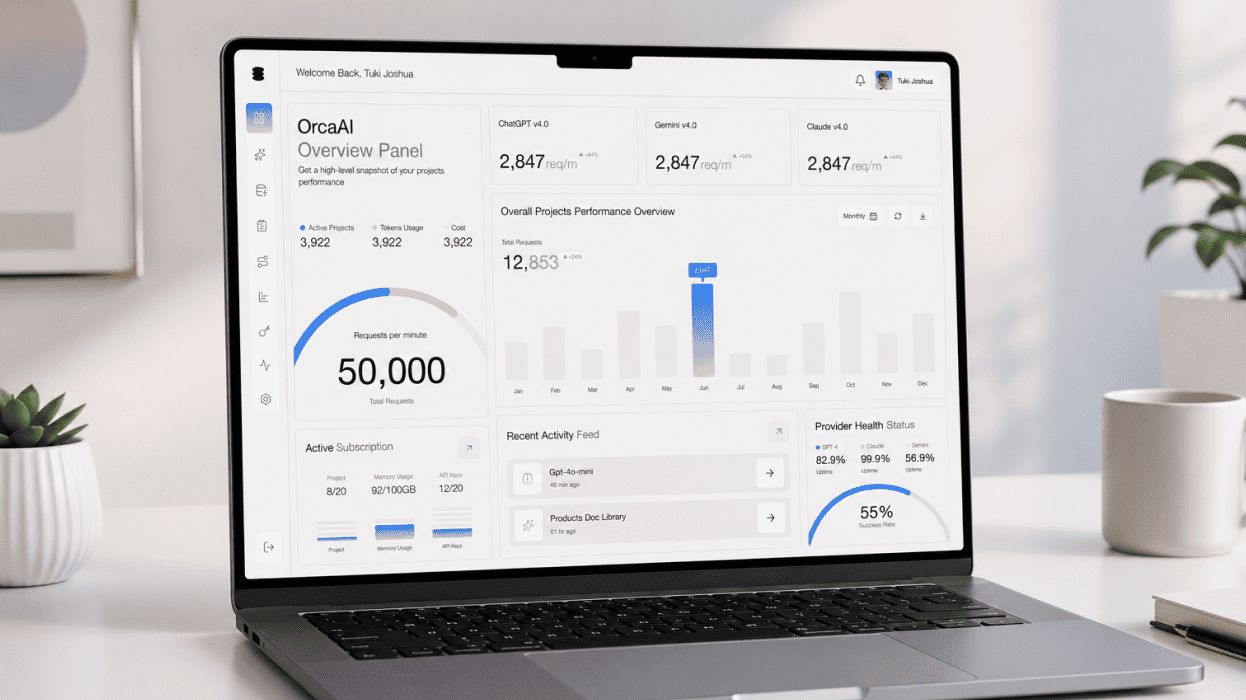
Design real-time dashboards that surface automation performance, alerts, and operational metrics.
Monitor, refine, and expand automations based on usage patterns and evolving business needs.
How we automate
Most automation projects fail by automating a bad process. We map the workflow first and target the steps where the hours actually go.
Document where the manual hours go, what the inputs and outputs are, and which steps genuinely need judgement rather than rules.
Rank candidate processes by hours saved, risk, and implementation difficulty. We tell you which ones to leave alone.
Build and run one automation in production with real volume, measuring accuracy and time saved before scaling anything else.
Add monitoring, exception handling, retry logic, and human review paths — then roll the pattern out across the rest of the process.
Track drift as upstream tools and models change, and expand coverage as the obvious wins are banked.
Industries we automate
The best automation targets are repetitive, rule-bound, and expensive to do slowly.
Success stories
Workflows where manual process time fell measurably after rollout.
Automation stack
We use no-code platforms where they are genuinely the right answer and code where they are not.
Delivery model
We baseline the current process before we touch it, so the saving is measurable rather than asserted in a case study you cannot verify.
Process audit — Baseline the hours, volume, and failure rate today
View related work
Useful reads
Benchmark pricing, candidate processes, and the agent-versus-script distinction.
Simple workflow automation runs $3,000–$10,000. An AI-enabled business process is $10,000–$30,000, multi-system automation $30,000–$75,000+, and enterprise agentic automation $75,000–$200,000+. The honest driver is integration count and exception handling, not the model.
Use a workflow tool when the inputs are structured and the rules are fixed — it is cheaper, faster, and more predictable. Use an agent when the inputs are unstructured and the steps depend on interpretation. Most real projects need both: deterministic tooling for the spine, agents at the genuinely ambiguous edges.
A single-workflow pilot usually pays back within the first quarter at realistic volumes. Multi-process rollouts take longer because of the change management, not the engineering. We baseline the current cost before building so the payback is a measured number rather than a projection.
Every workflow ships with exception handling, alerting, and a human review path rather than silently failing. You get run logs and failure alerts, and a clear route for manual override — an automation nobody trusts gets switched off within a month.
Automate better
Bring us the idea, product, workflow, or brand moment. We will shape it into a premium experience built to launch, scale, and convert.
Plan automation